
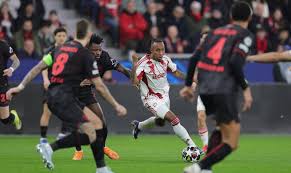
The 2016/17 Bundesliga season is remembered for Bayern’s dominance and the rise of RB Leipzig, but bettors experienced a different league to casual fans. The teams that made headlines were not always the ones that generated long‑term profit against the odds, because betting returns depend on price and expectation, not just points and goals. Distinguishing “famous teams” from “money teams” in that season requires looking at how the market valued each club, how often those valuations were wrong, and where reputation inflated or depressed prices.
Why fame and profitability diverge in a high-scoring Bundesliga
Structurally, the Bundesliga is one of Europe’s most attacking major leagues. Across the 2009/10–2018/19 period it consistently posted more goals per game than the Premier League, La Liga, Serie A, or Ligue 1, with one study citing a five‑season average of 2.98 goals per match compared with 2.74 in England and 2.70 in Spain. In 2016/17 specifically, the German top flight saw 877 goals across 306 games, an average of 2.87 per match. That environment naturally produced exciting football, which in turn reinforced the status and visibility of big attacking clubs.
But betting value comes from the gap between perceived strength and true probabilities. When a competition becomes known for high scoring and drama, as the Bundesliga did over those years, headline clubs attract disproportionate attention. That extra attention often leads to shorter prices on those teams and on goal‑heavy markets in their games, shrinking the edge for anyone who simply backs “the big side and the over.” In other words, the very factors that made certain clubs famous in 2016/17—goals, star forwards, title races—are the same forces that can erode their usefulness as consistent money‑makers.
What makes a “famous team” in the 2016/17 context?
Fame in that season largely followed the league table and scoring charts. Bayern Munich won their fifth consecutive title, finishing top with a comfortable cushion and cementing their status as the Bundesliga’s flagship club. Behind them, RB Leipzig’s remarkable debut campaign in the top flight, taking second place, made them a new focal point of media narratives. Borussia Dortmund, with Pierre‑Emerick Aubameyang winning the golden boot and a reputation for high‑tempo attacking football, remained another global reference point.
These teams shared characteristics that resonate with fans: trophy contention, attacking stars, and frequent appearances in highlight compilations featuring multi‑goal matches. From a bettor’s point of view, however, these same traits made them magnets for public money. Markets adjusted by routinely setting them up as heavy favourites and shading totals lines upward in their games, especially in high‑profile fixtures. The outcome is that “famous team” often meant “accurately or expensively priced team,” leaving less room for simple, repeatable edges.
What defines a “money team” for bettors?
By contrast, a “team that makes money” is one whose match outcomes, relative to the odds they were given, produced a positive long‑term return. That profitability can appear in several ways: underdogs that cover spreads more often than implied, mid‑table sides that win outright at generous home prices, or unfashionable clubs that regularly land unders or alternative totals because the market overestimates chaos. Statistical betting guides on the Bundesliga emphasise that home advantage, goal environment, and stylistic traits all matter for pricing, but the key is how those factors interact with public perception.
In practical terms, profit‑making teams are frequently those that quietly overperform expectations without drawing undue attention. A club sitting fifth or sixth in the table, with a solid but not spectacular attack, can generate more value than a title contender if the market consistently underrates them against mid‑tier opposition. Similarly, relegation battlers that tighten defensively may become reliable against‑the‑spread performers even while losing many games outright. From a 2016/17 vantage point, these “quiet overperformers” lived in the middle of the table rather than at the poles of brand power.
Mechanisms that create gaps between famous and profitable teams
Several mechanisms explain why famous clubs and money‑makers diverge. One is brand‑driven pricing: when a team’s name carries global recognition, their odds embed a premium because many casual bettors back them almost automatically, especially in accumulators. Bundesliga betting primers note that public enthusiasm often pushes favourite prices lower than a neutral model would suggest, particularly for the biggest clubs. Over a season, that premium can turn genuine strength into only modest or even negative value.
Another mechanism is narrative bias in totals markets. Because the Bundesliga’s goal rates and highlight packages emphasise spectacular scoring, books often set higher baseline goal lines for matches involving marquee teams, and many bettors still choose overs regardless. Over‑2.5 statistics show that while the league as a whole has a high proportion of games finishing over that threshold, it is still far from 100%, and many matches with big clubs end 2–0 or 2–1. Where markets price those games as if goalfests are the norm, unders or more conservative positions can quietly outperform.
Table: contrasting “famous” vs “profit” profiles
Before going deeper into examples and processes, it helps to summarise the difference between reputation‑driven and value‑driven team profiles. The following table outlines typical characteristics of a big‑name club versus a money‑making side in a season like 2016/17, grounded in the Bundesliga’s goal environment and pricing tendencies.
| Dimension | Famous team profile | Profit team profile |
| Public perception | Constantly on TV, in highlights, in title talk | Rarely headline news, limited global fanbase |
| Market pricing | Often short odds as favourite, high lines on goals | Frequently modest odds, less aggressive totals |
| Performance vs expectation | Strong in raw results, but market usually anticipates it | Regularly exceeds betting expectations, even with modest league position |
| Match style | High‑tempo, attacking, associated with “guaranteed goals” | Can be balanced or pragmatic; style may be underrated |
| Value opportunities | Selective – mainly when form dips or opposition is underrated | More frequent – especially in mid‑table or underdog roles |
Interpreting this structure, the bettor’s job in 2016/17 was not to ignore famous teams altogether, but to realise that steady value often lay with clubs whose solid performances were not fully reflected in their odds. The more one’s attention followed television narratives, the more likely one was to bet into efficiently priced or even overpriced lines.
How a bettor could have separated the two groups using 2016/17 data
The first step is descriptive: understand the league table and basic stats. Official tables and databases show Bayern, Leipzig, and Dortmund filling the top three spots, followed by Hoffenheim, Köln, Hertha, Freiburg and others in the European and upper‑mid positions. That ranking outlines competitive reality, but not betting performance. To gauge whether a team was a “money side,” you would compare their actual results against implied probabilities from odds—not publicly archived in full—but conceptually, you would track how often they beat spreads or outperformed expectations relative to price.
A second step uses contextual stats as proxies. Betting education pieces on the Bundesliga highlight factors like home‑field advantage (estimated at around a +0.33 goal swing in some multi‑season samples) and the league’s elevated goal output as levers that shape prices. Teams that leveraged strong home support or efficient attacking within that framework, without attracting disproportionate public enthusiasm, were prime candidates to be undervalued. Mid‑table sides with good home records and balanced goal differences, for instance, may have offered profitable returns in 2016/17 when laying small handicaps or backing them as modest favourites.
Where UFABET-style structures fit into identifying “money teams”
The distinction between famous and profitable clubs only becomes practically useful when you can act on it in a flexible market environment. In situations where a bettor engages with a sports betting service such as ทางเข้า ufabet168 that provides detailed odds, live lines, and historical price movement for Bundesliga fixtures, it becomes much easier to log how each team performs against expectations over time. With access to past closing odds, spreads, and result histories, you can classify clubs into categories: those whose odds were frequently too short because of brand weight, and those that quietly beat markets in specific roles—home favourites, small away dogs, or totals‑driven spots.
In that kind of environment, the main advantage is feedback. Instead of relying on vague impressions that “this team always pays,” a bettor can track return on investment by team and market type across a season like 2016/17. The data will usually show that famous sides only become genuine “money teams” in very specific conditions—after a poor run that sours public opinion, for instance—whereas certain less glamorous clubs steadily outperform their implied probabilities with far less volatility in perception.
A simple checklist for sorting famous vs profit-driven teams
To translate these abstractions into a repeatable process, it helps to adopt a short, structured checklist that could have been applied to the 2016/17 Bundesliga and remains relevant for similar seasons. Combining league‑level statistics, table information, and basic betting education, the logic can be organised in the following sequence.
- Identify perception leaders
List clubs that dominate media coverage, highlight reels, and international interest—Bayern, Dortmund, and, for that season, RB Leipzig clearly qualified. Assume they are more likely to be priced tightly, especially in televised matches. - Map league performance to pricing roles
For each team, note how often they appear as strong favourites, narrow favourites, or underdogs, and link that to their actual league position and goal difference. Teams whose odds consistently paint them as weaker than their table suggests may be hidden value candidates. - Cross-check style against totals markets
Use over‑2.5 and goal distribution data to see how each club’s matches actually behave. Where the market routinely sets very high goal lines based on reputation, but a side’s games regularly finish in the 2–3 goal range, there may be a structural edge on more conservative totals. - Track performance vs implied probabilities over time
Even without full historical closing line databases, approximate value by noting how often a club covers handicaps or wins at plus‑money odds. A recurring pattern of outperforming price expectations suggests that a team belongs more in the “money” than the “famous only” category.
Working through these steps makes “team that makes money” an empirical label anchored in how markets behaved in 2016/17, rather than a story told after a few memorable wins.
Where the concept fails and needs caution
There are important limits to separating famous and money‑making teams. One is that elite clubs can be both: when a side is genuinely dominant, as Bayern were across multiple seasons, they may still generate profit if early‑season pricing underestimates their level or if bettors selectively back them in specific spots (for example, after draws that temporarily cool public enthusiasm). Dismissing all big teams as unprofitable can therefore become as crude as backing them blindly.
Another issue is that the data needed to prove profitability—closing odds, stake patterns, and return profiles—is not fully transparent after the fact. League tables and scoring statistics, widely available from sources such as official standings and goal‑scoring charts, tell you who played well but not whether their matches delivered positive expected value. Without a disciplined record of bets actually placed at known prices, it is easy to retrofit the label “money team” onto any side that feels friendly in memory, even if the numbers would show otherwise.
casino online parallels: brand vs edge in football-themed environments
Similar dynamics appear in football‑inspired probabilistic systems where certain clubs or match‑ups receive more visual emphasis or marketing. These environments often draw users toward big‑brand teams and dramatic scenarios, echoing the way real‑world bettors cluster around famous Bundesliga clubs. Yet, just as in actual 2016/17 betting markets, branding and spectacle do not automatically translate into better expected value within those systems.
If a person engages with a casino online setting that uses football‑style events, recognising the difference between brand appeal and mathematical edge becomes critical. The attractive team or match is not necessarily the one with the most favourable odds structure; in fact, the popularity of those outcomes often means the underlying model is designed to keep their long‑run expectation close to neutral or negative. The skill lies in identifying where the quieter options—less glamorous teams, less heavily advertised markets—offer a better balance between probability and reward, just as mid‑table “money teams” did alongside the giants of the 2016/17 Bundesliga.
Summary
In the 2016/17 Bundesliga, “famous teams” were easy to spot: they won titles, produced star scorers, and filled highlight reels in a league already known for its high scoring. The teams that consistently made money for disciplined bettors, however, were defined not by branding but by how often they beat market expectations at the prices offered. Using league statistics, awareness of narrative‑driven pricing, and a structured process to track performance versus implied probabilities, it is possible to separate reputation from value. For anyone approaching similar leagues today, the core lesson remains: the clubs everyone talks about are rarely the ones that quietly deliver the best long‑term edges.